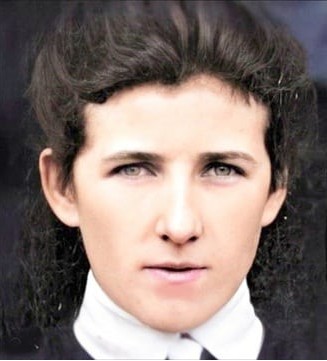
 Vera Mary Machell Cox (1885–1973) was an influential English sports pioneer, administrator, and foundational figure in women's field hockey and cricket.
Partner Eva McLaren, Frances Heron Maxwell
Queer Places:
Great Comp Cottage, Comp Ln, St Mary's Platt, Sevenoaks TN15 8QS, United Kingdom
Vera Mary Machell Cox (1885–1973) was an influential English sports pioneer, administrator, and foundational figure in women's field hockey and cricket.
Born as the youngest of ten siblings into an Edwardian family, her early life and extensive sporting exploits were meticulously documented in a remarkable multi-decade family correspondence archive known as the "Family Budget," which was later donated to the Bodleian Library in Oxford.
Cox rose to prominence as a formidable field hockey player, representing the Atalanta Ladies’ Hockey Club, the Kent County team, and the East of England before earning international honors as a midfield player for England between 1908 and 1912, eventually captaining the national team in 1912. Her international playing career was unfortunately cut short after she sustained a severe knee injury during a hard-fought match against Ireland in 1912. Refusing to leave the sport, Cox transitioned into coaching, selecting, and officiating, serving as an international umpire for more than twenty years across thirty fixtures between 1914 and 1939 while sitting on numerous committees for the All England Women’s Hockey Association.
Expanding her athletic advocacy into other disciplines, Cox became a founding member of the Women’s Cricket Association (WCA) in 1926, acting as the inaugural secretary of its committee. Alongside contemporaries such as Elsie Bennett and Frances Heron Maxwell, she instrumentalized the establishment of the first women's international Test match between England and Australia in 1934. She later advanced to serve as President of the WCA, during which tenure she helped shape the International Women's Cricket Council—uniting cricket organizations across Commonwealth lands including England, Australia, New Zealand, and South Africa—before stepping down from her leadership role in 1964.
Beyond her athletic achievements, Cox dedicated her organizational talents to public service and community welfare. Beginning in 1932, she served as the first national Markets Organiser for the National Federation of Women’s Institutes, successfully establishing hundreds of markets that enabled members to sell surplus domestic and agricultural produce. During the Second World War, she directed wartime efforts as the County Secretary for the West Kent Women’s Land Army, earning an MBE in 1946 in recognition of her administrative leadership.
In her personal life, Cox formed deep, enduring bonds within a prominent women's network. From 1919 onward, she lived at Great Comp, a historic estate in Kent, as part of a close-knit, all-female household alongside suffragist Eva McLaren and her lifelong companion, Frances Heron-Maxwell ("Max"), whom Cox had first met through hockey in 1908. Upon Frances Heron-Maxwell's death in 1955, Cox inherited the Great Comp estate before selling the property the following year. She spent her final years living in Scotland, where she passed away in 1973 at the age of 88, leaving behind a rich archival legacy of diaries, scrapbooks, and letters that continue to illuminate the history of early twentieth-century women's sports and autonomous female communities.
References:
Support this project
This website is a passion project researched, developed, and funded entirely by me. If you find the content valuable and would like to help support the ongoing research and hosting costs, any contribution is deeply appreciated.
Thank you for keeping this independent resource alive!
My books on Amazon: Elisa Rolle's books